HUMANOID expert TALK
THE ROBOT OUT OF THE CAGE.
Why "Safe Stop" fails and what replaces it.
(ONLINE), featuring Dr. Florian Weißhardt, Dr. Tim Fröhlich, and Julia Astrid Riemenschneider (Synapticon).
If you missed the talk, you can watch the recording here. Please fill out this form to do so.
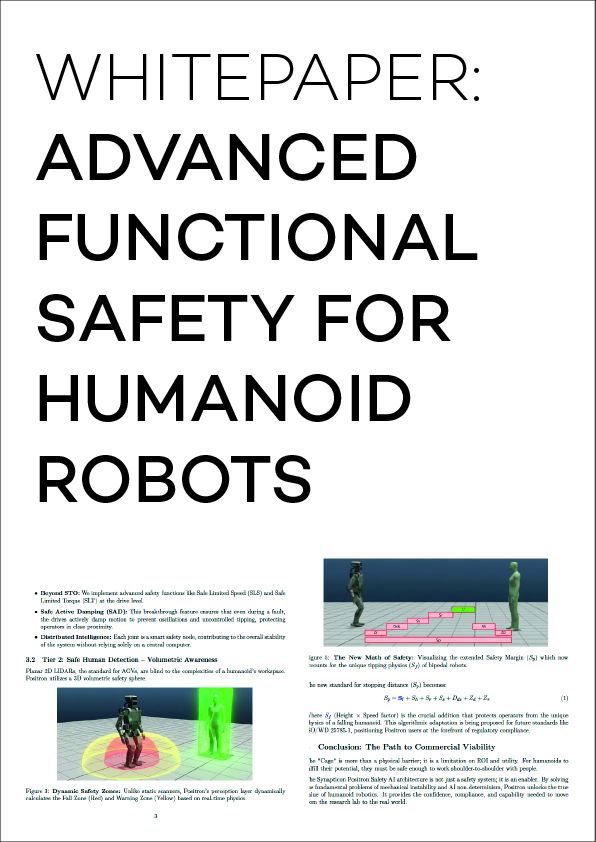
Switching to safety mode can destabilize a humanoid.
If you reduce the torque at the wrong moment, you create instability—not protection.
Multi-axis safe motion
Safe active damping enables safe fall control

Safe Human Detection
Dynamic fall and safety zones that take fall prediction into account

Safe Guided Falling
Restriction of non-deterministic decisions in context

Multi-level system integration
Movement, proximity, and behavioral safety as an overall concept


FOR TEAMS THAT USE HUMANOIDS IN HUMAN ENVIRONMENTS
Online Session: March 24, 2026.
4:00 p.m. (CET)
This session is intended for engineers responsible for making decisions regarding security and architecture at the system level.
- CTO
- Robotics Architect
- Controls Lead
- Safety Owner
As your robot moves beyond the cage, your safety architecture must evolve. Reliable safety is non-negotiable in real-world applications. Register to watch the event recording.
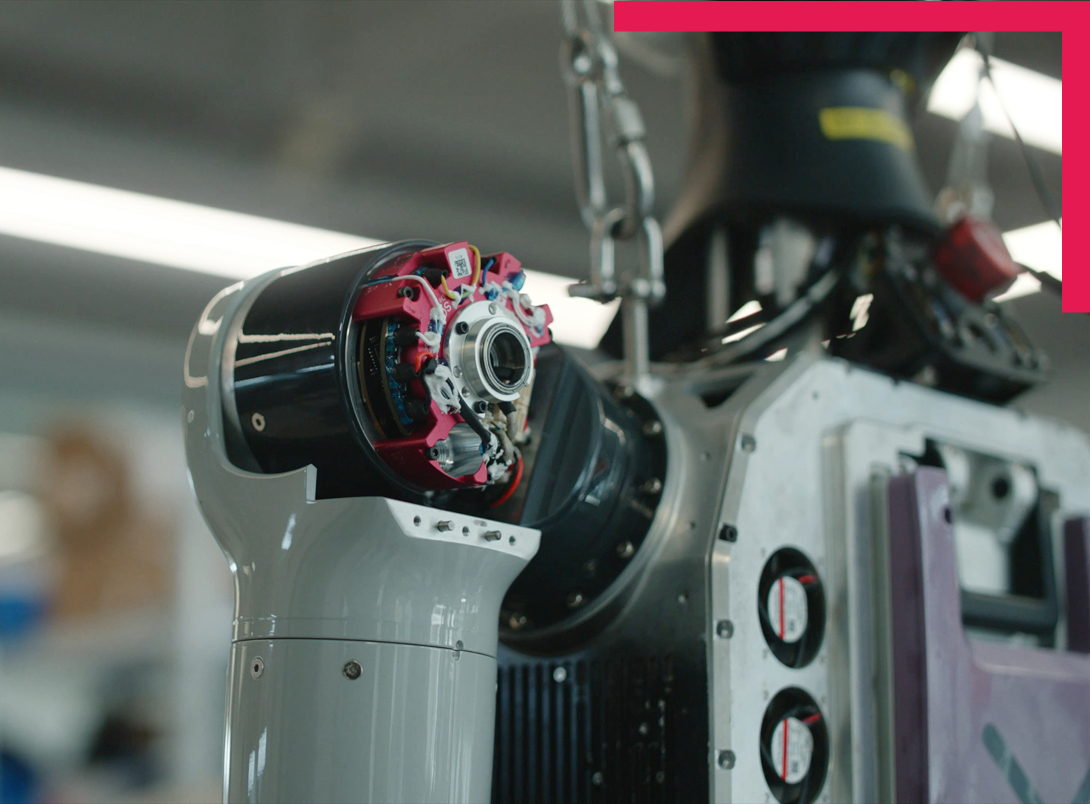


Safe processes thanks to INTEGRATED safety functions
Synapticon is the only manufacturer of highly integrated motion control solutions that can offer certified safety in addition to servo drives, brakes and dual encoders. And has thus redefined the standard for safe robot and AGV applications.
SOMANET SAFE MOTION
Functional safety for AI-based robotics applications. Synapticon’s POSITRON SAFETY AI is revolutionizing industrial safety by advancing the functional safety of AI-controlled robots and machines.
POSITRON SAFETY AI